
Telia Rumal sarees are known for their distinctive geometric patterns, traditional colour combinations and intricate handloom craftsmanship. Associated with Puttapaka in Telangana, this textile represents a specialised form of Ikat weaving in which the design is created by dyeing the yarn before weaving, rather than printing the pattern onto finished fabric.
The name Telia Rumal combines tel, meaning oil, and rumal, meaning handkerchief or cloth. Traditionally, the yarn underwent a distinctive oil-based preparation process that contributed to the textile’s characteristic feel, appearance and smell. The craft is particularly associated with red, black and white patterns and the double Ikat technique. Google Arts & Culture+2
Making a Telia Rumal saree involves several stages, from preparing the cotton yarn and planning the design to tying, dyeing and aligning the threads on a handloom. Each stage requires patience, accurate calculations and skilled workmanship.
Also read: Single Ikat vs Double Ikat
1. Selecting and Preparing the Yarn
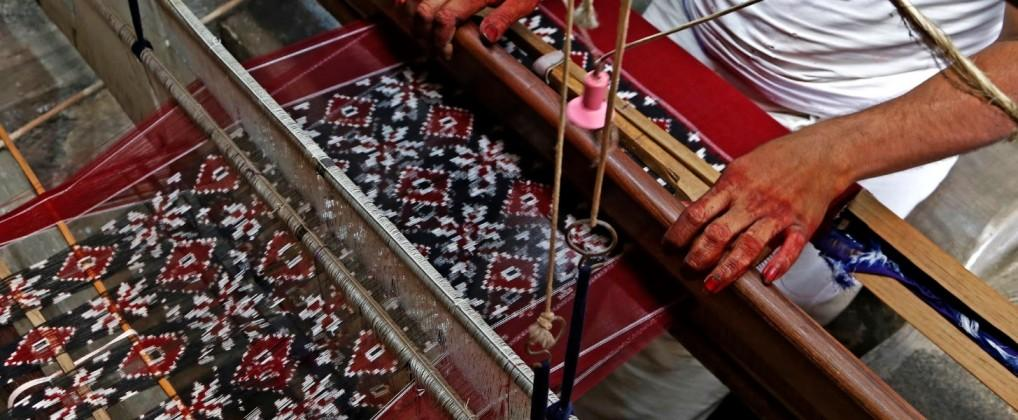
The first step is selecting suitable yarn. Traditional Telia Rumal is primarily associated with cotton yarn, although contemporary weavers may produce related textiles in other materials. The choice of yarn influences the fabric’s texture, strength and final appearance. origin-gi.com+1
In the traditional process, yarn preparation is especially important because it involves more than cleaning the fibre. Historical and documented methods use a combination of sheep dung, castor-seed pod ash and oil, commonly gingelly (sesame) oil or castor oil. The exact preparation and duration can vary between documented accounts.
The yarn is first treated with a solution made from sheep dung and then dried. A preparation involving castor-seed pod ash and oil is subsequently applied. The yarn is repeatedly treated and dried before it is washed and prepared for the next stages.
This traditional process helps prepare the cotton yarn for dyeing and contributes to the distinctive qualities associated with Telia Rumal. Some historical accounts describe the treatment as lasting approximately 16–21 days.
An important distinction: The oil-based treatment is part of the traditional identity of Telia Rumal, but it should not be described as a mandatory step in every contemporary production process. Documented accounts from Puttapaka indicate that this treatment has also been discontinued in some modern production.
2. Preparing and Winding the Yarn
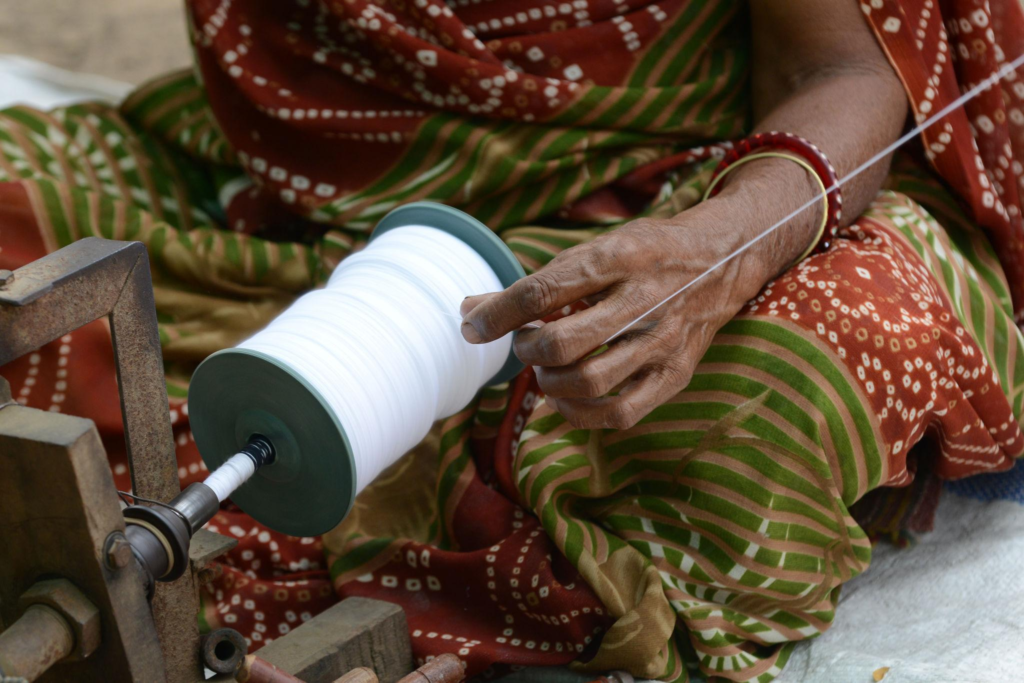
Once the yarn is ready, it must be arranged into manageable lengths and bundles for the weaving process. The threads are wound and organised so that they can be measured, counted and positioned accurately.
Broken threads must be repaired, and tangled yarn must be separated carefully. Any unevenness or confusion at this stage can create difficulties later, particularly when the weaver needs to align individual threads to form an intricate geometric pattern.
The prepared yarn is divided according to its intended use as warp or weft. Both sets are essential in double Ikat weaving, but they follow separate preparation and dyeing processes before they come together on the loom.
Unlike ordinary fabric production, the design-making work in Ikat begins before the fabric exists. The yarn itself must carry the colour arrangement required to produce the final motif.
3. Planning the Saree Design on Graph Paper
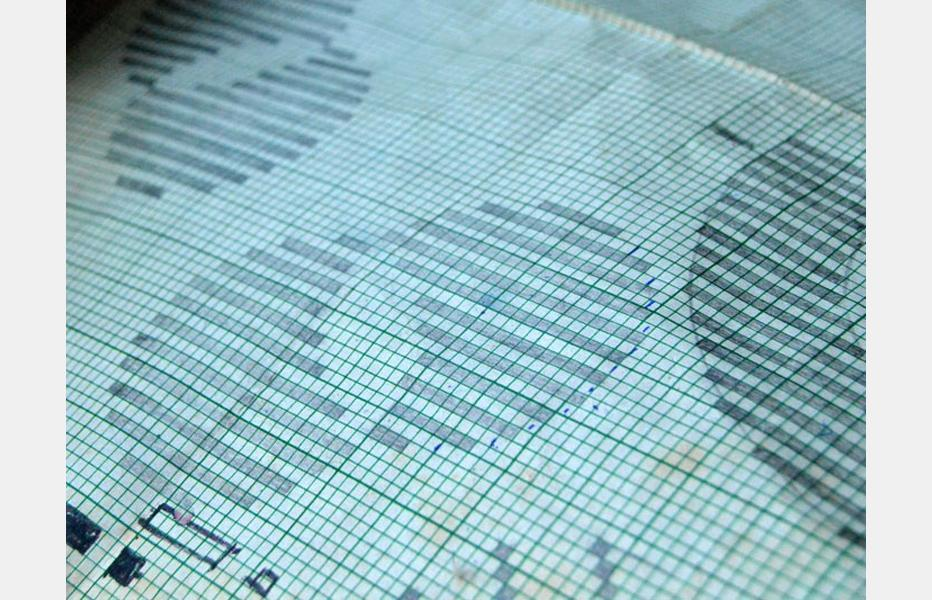
Before the yarn is tied and dyed, the artisan plans the design carefully. Traditional Telia Rumal patterns often use geometric arrangements, so the placement of each motif must be calculated rather than left to chance.
The design is mapped on graph paper, with each grid helping the weaver determine how the pattern will be distributed across the fabric. The artisan works out the number of threads required, the placement of colours and the repetition of the motifs.
The design must then be translated into two separate thread systems:
- Warp: The lengthwise threads that run along the fabric.
- Weft: The crosswise threads that pass through the warp during weaving.
In double Ikat, the design must be planned for both systems. The positions of the coloured sections on the warp and weft need to correspond with one another when the threads intersect on the loom. This makes the planning stage particularly demanding.
4. Arranging the Warp Threads
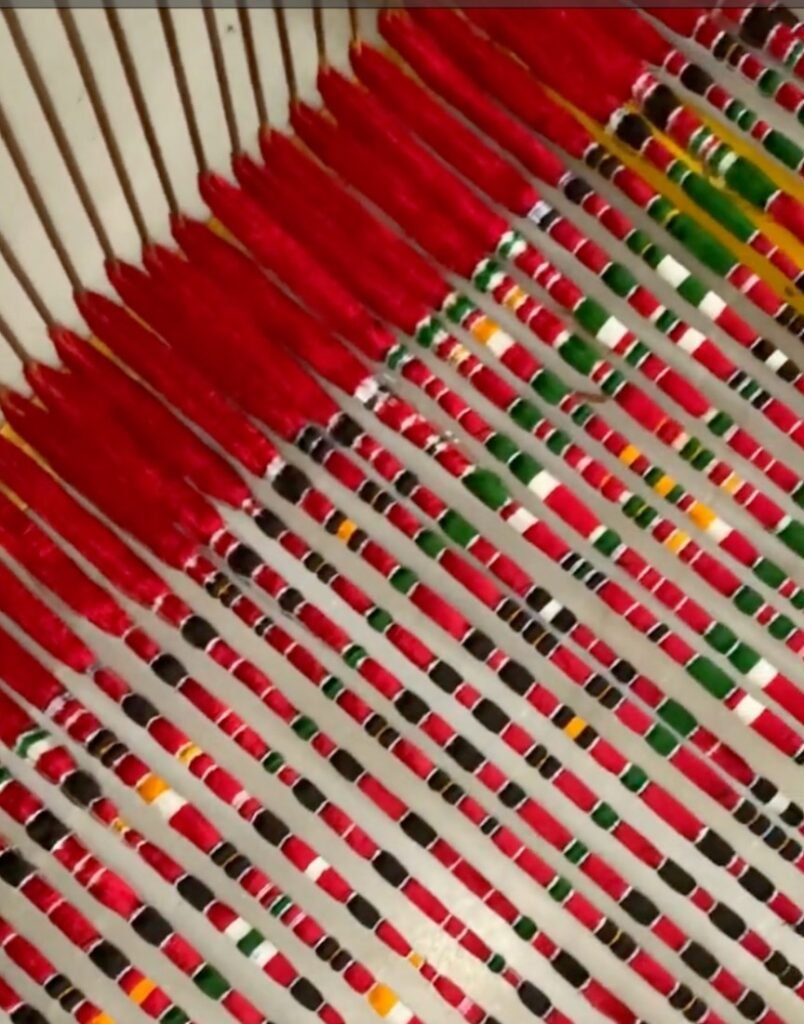
After the design has been planned, the warp yarn is arranged in the required order. The threads are stretched and organised on a frame or between fixed supports so the artisan can measure them and identify the exact positions where the design must appear.
The warp must remain evenly arranged and under suitable tension. The weaver counts the threads, checks their positions and repairs any broken strands before proceeding.
In documented Telia Rumal production, the warp is starched and stretched under tension during preparation. Once the threads are dry, the artisan counts them and checks the design before transferring the prepared warp to the loom. Google Arts & Culture+1
This stage establishes the foundation of the saree. If the warp threads are incorrectly arranged or the pattern positions are inaccurate, correcting the design later becomes difficult.
5. Marking and Tying the Yarn
The next stage is known as the tie-and-dye or resist-dyeing process. The artisan transfers the planned design onto the yarn and identifies the sections that must remain protected from particular colours.
Small sections of yarn are tightly tied using suitable binding materials, such as cotton thread. Rubber strips may also be used in some Ikat production methods. The binding prevents dye from reaching the covered sections during dyeing.
For example, if a particular section must remain white while the surrounding yarn becomes red, that section is tied securely before the yarn is immersed in the red dye bath.
The positions of the ties determine where the colour boundaries will appear in the final design. The ties must therefore be placed accurately and secured firmly enough to resist the dye.
In Telia Rumal double Ikat, this process is carried out for both warp and weft yarns. Each set must be prepared according to its own part of the overall design. Sathyabama University+1
6. Dyeing the Yarn and Creating the Colours
After the yarn has been tied, it is immersed in the appropriate dye bath. The exposed sections absorb the dye, while the tied sections remain protected. The yarn is then removed and dried before the next stage.
When a design requires multiple colours, the artisan may repeat the tying and dyeing process in a carefully planned sequence. Sections that must retain an earlier colour are protected while other areas are exposed to the next dye.
Traditional Telia Rumal is strongly associated with red, black and white. The precise dye materials and sequence depend on the production method. Historical and technical descriptions mention traditional dyeing materials and mordants, including alizarin and alum, while contemporary practices can differ.
This stage requires careful control. If the bindings are loose, dye can seep into protected areas. If the colour placement is inaccurate, the final motif may not appear as intended.
Once the required dyeing stages are complete, the yarn is untied where appropriate, washed or otherwise prepared as required, and checked. The resulting yarn contains the colour arrangement that will form the pattern during weaving.
7. Preparing the Weft for Double Ikat
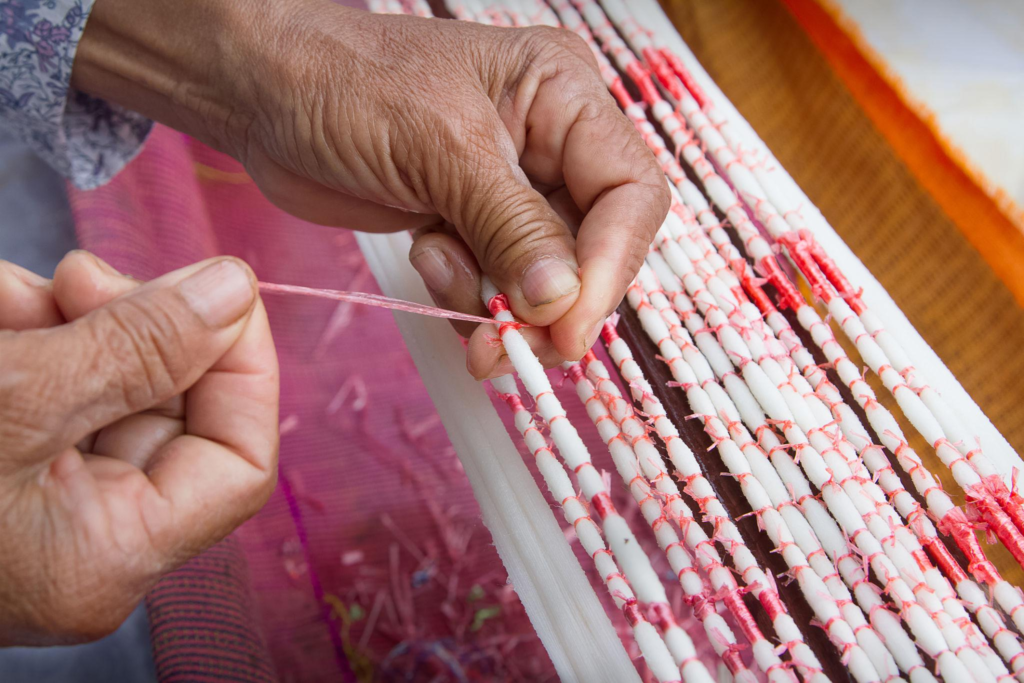
Preparing the weft is one of the defining stages of Telia Rumal’s double Ikat process.
In single Ikat, only one thread system—either the warp or the weft—is resist-dyed to create the pattern. In double Ikat, both the warp and the weft are resist-dyed before weaving.
The weft yarn must be divided, measured, tied and dyed according to the design. Its colour positions must correspond to those planned for the warp.
A notable detail in documented Telia Rumal production is that the weft may be prepared after the warp has been mounted on the loom and a plain heading has been woven. This allows the artisan to take accurate measurements for the placement of the weft design. Google Arts & Culture+1
This is an important difference from simply preparing two independent sets of patterned yarn. The artisan must coordinate their positions so that the two systems produce a single, coherent design.
8. Setting Up the Handloom
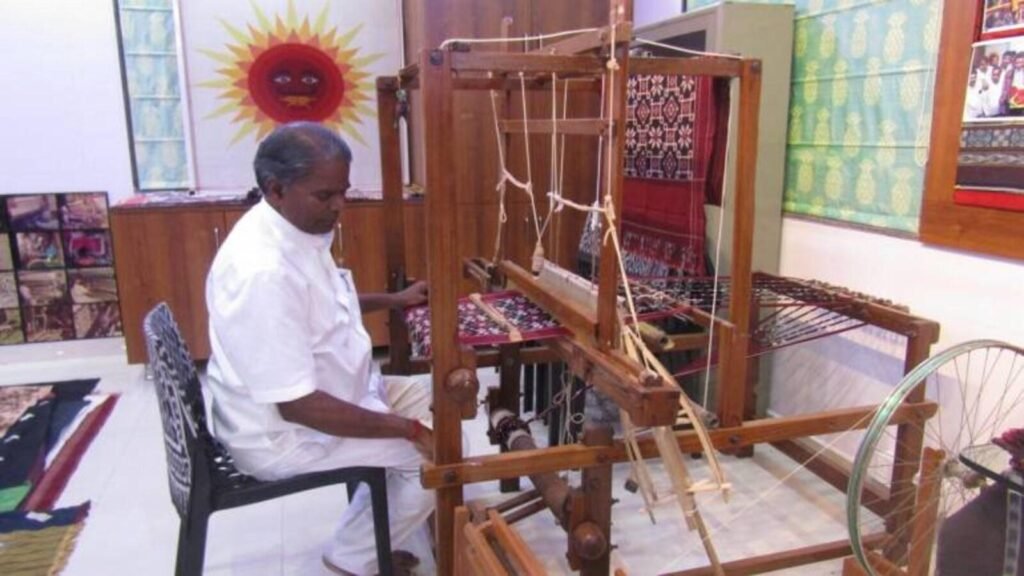
Once the warp is prepared, it is mounted on the handloom. The threads are arranged in the correct sequence and passed through the loom’s components so that the weaver can control their movement during weaving.
In documented Telia Rumal production, the ends of the new warp may be joined to the existing warp on the loom. This process, known as end piecing, requires care because the threads must remain in the correct order.
The weaver checks the thread arrangement, tension and design positions before beginning the main patterned section. Every thread must be correctly positioned to ensure that the pre-dyed design emerges as intended.
Telia Rumal is traditionally woven on a handloom, and the artisan’s skill is essential to coordinating the warp, weft and loom movements. Google Arts & Culture+1
9. Aligning the Warp and Weft During Weaving
This is the most technically demanding stage of making a Telia Rumal saree.
The weaver passes the prepared weft through the warp, gradually interlacing the two sets of yarn. As weaving progresses, the coloured sections of both systems must align to form the intended geometric motifs.
For example, if a red section of the warp is meant to meet a red section of the weft, the artisan must position the threads so that the colours intersect in the correct place. The same precision is needed for black and white areas and for every repeated element of the design.
Unlike printed fabric, where a pattern can be applied to a completed surface, a double Ikat design is encoded into the yarn before weaving begins. The final pattern emerges only when the two carefully prepared thread systems are brought together.
Even a small alignment error can change the appearance of a motif. The weaver must continually observe the developing pattern and make careful adjustments as needed.
This combination of planning, yarn preparation and accurate weaving is what makes double Ikat particularly intricate.
10. Creating the Saree Body, Border and Pallu
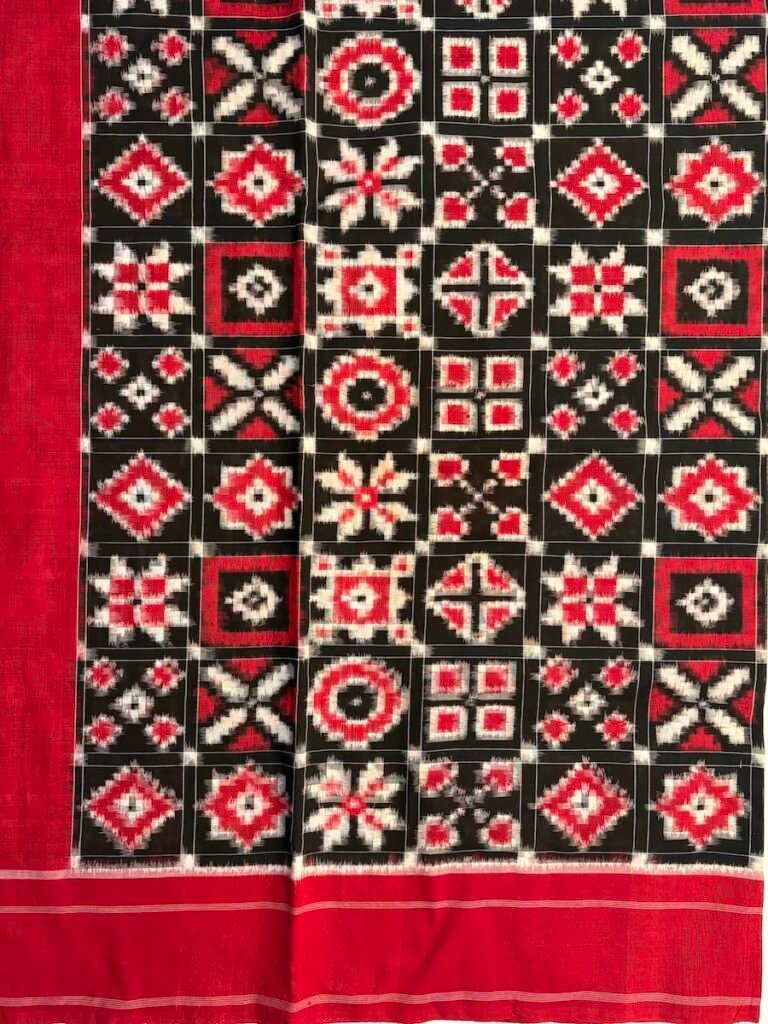
As the weaving continues, the design gradually develops across the fabric. The saree body, borders and pallu are produced according to the chosen design and the arrangement of the pre-dyed yarn.
Traditional Telia Rumal is especially associated with geometric patterns and the red, black and white colour palette. Contemporary versions may introduce different colour combinations, motifs and layouts while drawing on the same textile tradition.
The final appearance depends on how the warp and weft patterns interact. When the threads align correctly, they produce the intended motifs and repeating geometric arrangements.
The weaver must maintain consistent tension and careful pattern alignment throughout the length of the saree. This requires concentration and experience because the design is created through the interlacing of the yarn rather than applied afterwards.
11. Finishing and Quality Inspection
After weaving is complete, the saree undergoes finishing and inspection.
The artisan checks the fabric for broken threads, irregularities and problems in the pattern. The finished textile is then prepared according to the relevant finishing method.
Documented Telia Rumal production includes starching and ironing after weaving, followed by preparation for sale. The precise finishing requirements can vary depending on the fabric and the production method. Google Arts & Culture+1
Quality inspection is important because the final textile represents the work of many stages: preparing the yarn, planning the design, tying and dyeing both thread systems, mounting the loom and aligning the patterns.
The completed saree is now ready to be presented as a finished handwoven textile.
Why Is Making a Telia Rumal Saree So Complex?
The complexity of Telia Rumal comes from the combination of its traditional yarn preparation and double Ikat weaving technique.
Unlike a printed saree, its motifs are created by carefully arranging colours within the yarn before weaving. Both warp and weft must be resist-dyed, and their patterns must align when they intersect on the loom.
The traditional oil-based yarn treatment is another distinctive aspect of the textile’s heritage, although it is not used in every contemporary production method. Together, these characteristics distinguish Telia Rumal from other Ikat textiles. Impart+1
Every stage demands patience and technical knowledge. A mistake in tying, dyeing or alignment can affect the final design, making the weaver’s experience particularly valuable.
Conclusion
Making a Telia Rumal saree is a detailed process that combines traditional yarn preparation, geometric design planning, resist-dyeing and precise handloom weaving. The artisan must prepare both warp and weft, create the required colour patterns through tying and dyeing, and align the threads carefully to reveal the design.
Its distinctive identity comes from the double Ikat technique and its historical association with oil-treated yarn. Preserving knowledge of these methods helps explain the skill behind the textile and the importance of the weaving community in Puttapaka, Telangana.
When you look at a finished Telia Rumal saree, you are seeing more than a pattern. You are seeing a design built into the yarn itself, brought to life through careful preparation and the precision of the handloom weaver.